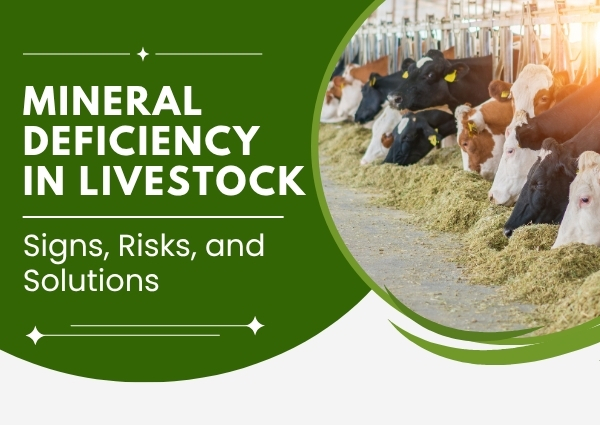
Livestock health and productivity depend on a balanced diet that provides all essential nutrients, including minerals. Minerals play a critical role in growth, reproduction, immunity, bone development, and overall metabolic functions. When animals do not receive adequate amounts of these essential nutrients, mineral deficiencies can occur, leading to reduced performance, poor health, and significant economic losses for farmers. Understanding the signs, risks, and effective solutions for mineral deficiencies is crucial for maintaining healthy and productive livestock.
Understanding Mineral Deficiency in Livestock
Minerals are generally categorized into two groups: macrominerals and trace minerals. Macrominerals such as calcium, phosphorus, magnesium, sodium, and potassium are required in larger quantities, while trace minerals including zinc, copper, selenium, iron, and manganese are needed in smaller amounts. Despite the difference in required quantities, both categories are equally important for animal health.
Mineral deficiencies can develop due to poor-quality feed, imbalanced rations, soil nutrient depletion, inadequate supplementation, or environmental factors that affect mineral absorption. Different species and age groups may also have varying mineral requirements.
Common Signs of Mineral Deficiency
Recognizing the symptoms of mineral deficiency at an early stage can help prevent severe health complications. Some common signs include:
- Poor growth and weight gain
- Reduced feed efficiency
- Weak bones and skeletal abnormalities
- Poor reproductive performance
- Low milk production
- Dull coat and poor skin condition
- Reduced immunity and increased disease susceptibility
- Muscle weakness and fatigue
- Anemia and poor blood health
- Behavioral changes such as licking soil, wood, or other unusual objects
For example, calcium and phosphorus deficiencies may lead to weak bones and lameness, while zinc deficiency can cause skin lesions and poor hoof quality. Selenium deficiency may result in muscle disorders and reproductive issues.
Risks Associated with Mineral Deficiency
Mineral deficiencies can have serious consequences for livestock operations. Reduced productivity is one of the most immediate impacts, affecting meat production, milk yield, and reproductive efficiency. Animals suffering from deficiencies are often more vulnerable to infections and diseases due to weakened immune systems.
In breeding animals, mineral imbalances may lead to infertility, delayed conception, abortions, and poor offspring development. Young animals are particularly at risk, as deficiencies during growth stages can cause permanent developmental issues.
The economic impact can be substantial. Farmers may face increased veterinary expenses, lower production efficiency, higher mortality rates, and reduced profitability. Therefore, preventing mineral deficiencies should be a priority in every livestock management program.
Effective Solutions for Preventing Mineral Deficiency
The most effective way to prevent mineral deficiency is through a balanced nutritional program. High-quality feed and forage should form the foundation of livestock nutrition. Regular feed analysis can help identify nutrient gaps and guide supplementation strategies.
Mineral supplements are widely used to ensure animals receive adequate nutrient levels. These supplements may be provided in the form of mineral mixtures, blocks, licks, or fortified feed formulations. Choosing the right supplement should be based on species, age, production stage, and regional mineral deficiencies.
Farmers should also conduct periodic health assessments and monitor animal performance indicators such as growth rates, milk production, fertility, and overall health. Consulting with veterinarians and animal nutrition experts can help develop customized mineral nutrition plans.
Additionally, maintaining proper feeding practices, ensuring clean water availability, and improving pasture management can contribute significantly to better mineral utilization and animal health.
Mineral deficiencies remain a common challenge in livestock farming, but they can be effectively managed through proper nutrition and supplementation. Early identification of symptoms, regular monitoring, and the use of high-quality mineral supplements are essential for maintaining animal health and maximizing productivity. By investing in a comprehensive mineral nutrition program, farmers can improve livestock performance, enhance profitability, and ensure long-term sustainability.
At Amino Pharma, we are committed to supporting livestock health through scientifically formulated nutritional solutions that help animals achieve optimal growth, productivity, and well-being.