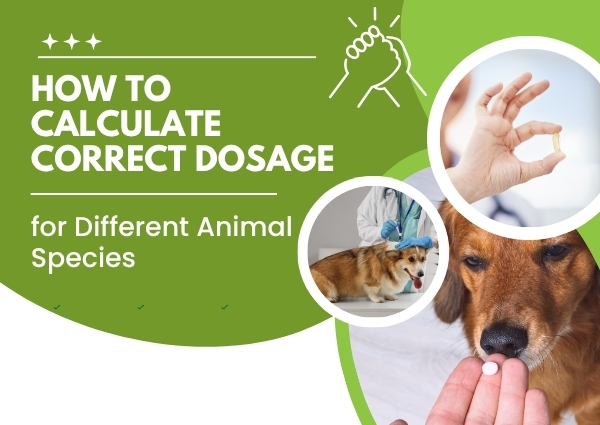
Correct veterinary dosage is essential for safe and effective animal healthcare. Cattle, poultry, pigs, dogs, cats, goats, and other animals differ greatly in body weight, metabolism, physiology, and sensitivity to medicines. Therefore, the same amount of a veterinary product cannot be used across different species without professional assessment.
Dosage calculations should always follow the product label and a qualified veterinarian’s instructions.
Why Veterinary Dosage Must Be Accurate
Giving too little medicine may fail to produce the intended therapeutic effect, while excessive amounts can increase the risk of adverse effects or toxicity. Incorrect dosing of antimicrobial medicines can also contribute to treatment failure and antimicrobial resistance.
Start With the Correct Body Weight
Many veterinary medicines are prescribed according to body weight. For this reason, determining an animal’s weight accurately is one of the first steps in dosage calculation.
A calibrated livestock scale provides the most reliable measurement. When weighing equipment is unavailable, species-appropriate weight estimation methods may sometimes be used, but estimates can introduce errors.
Understand the Label Dosage
Veterinary product labels usually provide important information about species, concentration, route of administration, recommended dose, frequency, duration, storage, and withdrawal requirements where applicable.
A dose may be expressed as an amount of active ingredient per kilogram of body weight or as a product-specific volume or quantity.
Why Medicine Concentration Matters
Two products containing the same active ingredient may have different concentrations. This means that equal volumes can deliver very different amounts of the active substance.
Before calculating any volume, the veterinarian must consider both the prescribed dose and the concentration stated on the label. Substituting one formulation for another without recalculating can result in significant dosing errors.
Species Differences Affect Dosage
Animals process medicines differently. A dosage appropriate for cattle cannot automatically be transferred to pigs, goats, poultry, dogs, or cats.
Species differences can influence absorption, distribution, metabolism, and elimination. Age, pregnancy, hydration, liver function, kidney function, nutritional status, and disease severity may also influence treatment decisions. This is why dosage charts intended for one species should never be casually applied to another.
Dosage in Poultry and Group Treatment
Poultry medications are sometimes administered through drinking water or feed rather than individually. In these situations, correct administration requires more than simply knowing the number of birds.
Veterinarians may consider flock weight, average body weight, water or feed consumption, product concentration, environmental temperature, and treatment instructions. Because consumption can change during illness or hot weather, group medication requires careful monitoring to reduce underdosing or overdosing.
Route of Administration Is Important
Veterinary medicines may be administered orally, by injection, through drinking water, in feed, or by other approved routes. The route specified for a product is part of its safe-use instructions.
Farmers should never change the route simply for convenience. Injection technique, equipment cleanliness, administration site, and handling can also influence safety and treatment success.
Consider Treatment Frequency and Duration
Correct dosage includes more than the amount given at one time. Frequency and treatment duration are equally important.
Stopping treatment prematurely, repeating doses too frequently, or extending therapy without veterinary advice can create unnecessary risks. Farmers should maintain treatment records showing the animal, product, date, amount, and withdrawal period when relevant.
Avoid Common Dosage Mistakes
Common errors include estimating body weight poorly, confusing milligrams with milliliters, overlooking concentration differences, using equipment with inaccurate markings, and copying doses from another animal.
Appropriate measuring or dosing equipment should be used according to the product and veterinarian’s directions.
Role of Veterinarians in Safe Dosing
A veterinarian considers diagnosis, species, body weight, clinical condition, medical history, and product characteristics before recommending treatment. Professional guidance becomes especially important for young, pregnant, elderly, severely ill, or food-producing animals.
Amino Pharma supports responsible veterinary care through animal healthcare products intended for appropriate use under recommended guidance. Reliable labeling, proper storage, and genuine products also contribute to safer administration.
Accurate records help veterinarians review previous treatments and make safer decisions during future health problems.
Calculating veterinary dosage correctly requires accurate body weight, careful reading of product instructions, knowledge of medicine concentration, the correct administration route, and consideration of species-specific factors. Group treatment in poultry and livestock requires additional attention to consumption and environmental conditions.
Dosage should never be based on guesswork or copied from another species. By combining veterinary supervision, accurate measurement, treatment records, responsible medicine use, and quality products from trusted companies like Amino Pharma, farmers and pet owners can support safer treatment, better animal health, and more responsible veterinary healthcare.