Vets who specialize in herd and flock health don’t just show up when something goes wrong. They work alongside farmers as ongoing partners — helping design systems that keep animals healthy from the ground up. And the more you understand what that actually involves, the more sense it makes to invest in it seriously.
Seeing the Herd, Not Just the Animal
One of the first shifts that happens when a vet moves into preventive herd medicine is the change in perspective. In a companion animal practice, the focus is almost always on the individual — one dog, one cat, one diagnosis. In a herd or flock setting, the individual animal still matters, but the health of the group is what drives decision-making.
A vet looking at a flock of two thousand laying hens isn’t just watching for sick birds. They’re looking at production data, mortality rates, feed conversion, body condition scores across the group, and behavioral patterns that might signal an emerging problem before it becomes visible. The same logic applies to a cattle herd or a sheep flock. The numbers tell a story, and trained eyes can read early warning signs that most farmers — however experienced — might miss.
This population-level thinking is what makes preventive medicine so powerful. Catching a respiratory issue when two percent of the herd is showing subtle signs is infinitely better than dealing with it once twenty percent are visibly sick and production is already compromised.
Vaccination Programs: The Foundation of Flock Health
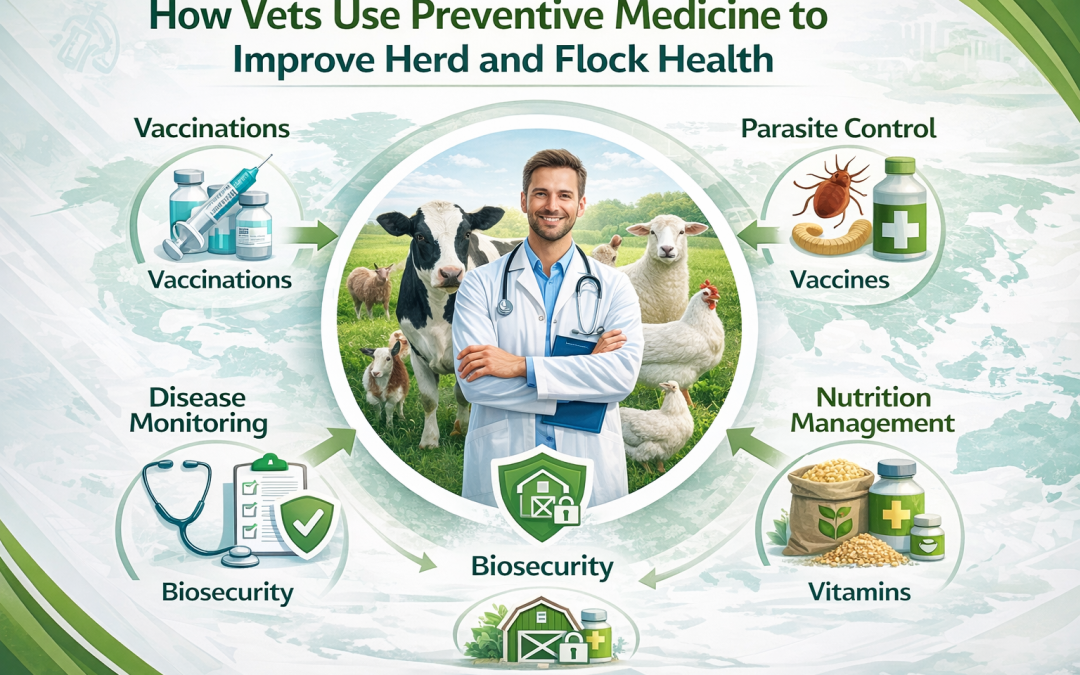
If there’s one tool that sits at the center of preventive veterinary medicine, it’s vaccination. A well-designed vaccination program protects animals from the diseases most likely to threaten them based on their species, region, age, and production system. It sounds straightforward, but getting it right takes real expertise.
Vets don’t just hand farmers a generic vaccine schedule. They assess the specific disease risks present on that farm or in that region, look at the history of health challenges the operation has faced, factor in maternal immunity in young animals, and design a program that provides protection when it’s most needed. Timing matters. Vaccine selection matters. Administration technique matters. A vaccine given incorrectly or at the wrong stage of an animal’s life may provide little to no protection at all.
And as the industry moves away from heavy antibiotic reliance — which is the right direction from both a public health and regulatory standpoint — vaccines are carrying even more weight. Companies like AminoPharma have recognized this shift, developing veterinary pharmaceutical and biological products that support immunity and animal resilience as part of a broader preventive health strategy.
Nutrition, Biosecurity, and the Pieces People Underestimate
Vaccination gets most of the attention, but experienced vets will tell you that nutrition and biosecurity are just as critical — and often more neglected.
Nutritional deficiencies don’t always look like deficiencies. Sometimes they look like poor growth rates, reduced fertility, increased susceptibility to infection, or higher-than-normal mortality in young animals. A vet reviewing a herd’s health performance will often find nutritional gaps sitting quietly behind problems that look like disease on the surface. Correcting those gaps — through targeted supplementation, feed formulation adjustments, or trace mineral programs — can transform herd health outcomes without a single antibiotic being used.
Biosecurity is the other underappreciated pillar. Movement protocols, quarantine procedures for incoming animals, hygiene practices in housing, and visitor management all create barriers that keep pathogens out. Vets help farmers audit their biosecurity systems, identify weak points, and put practical improvements in place. It’s unglamorous work, but it pays off every time an outbreak that could have swept through a farm never gets through the gate.
Prevention Is an Investment, Not a Cost
The mindset shift that matters most in all of this is learning to see preventive veterinary care as an investment with measurable returns — not as an overhead expense to minimize. Healthier animals grow faster, reproduce more reliably, convert feed more efficiently, and require fewer costly interventions. The math, done honestly, almost always favors prevention.
Vets who work in herd and flock health understand this deeply. Their job isn’t to treat disease — it’s to make disease less likely. And in 2026, with input costs high and margins under pressure, that kind of partnership between farmers and veterinary professionals has never been more valuable.