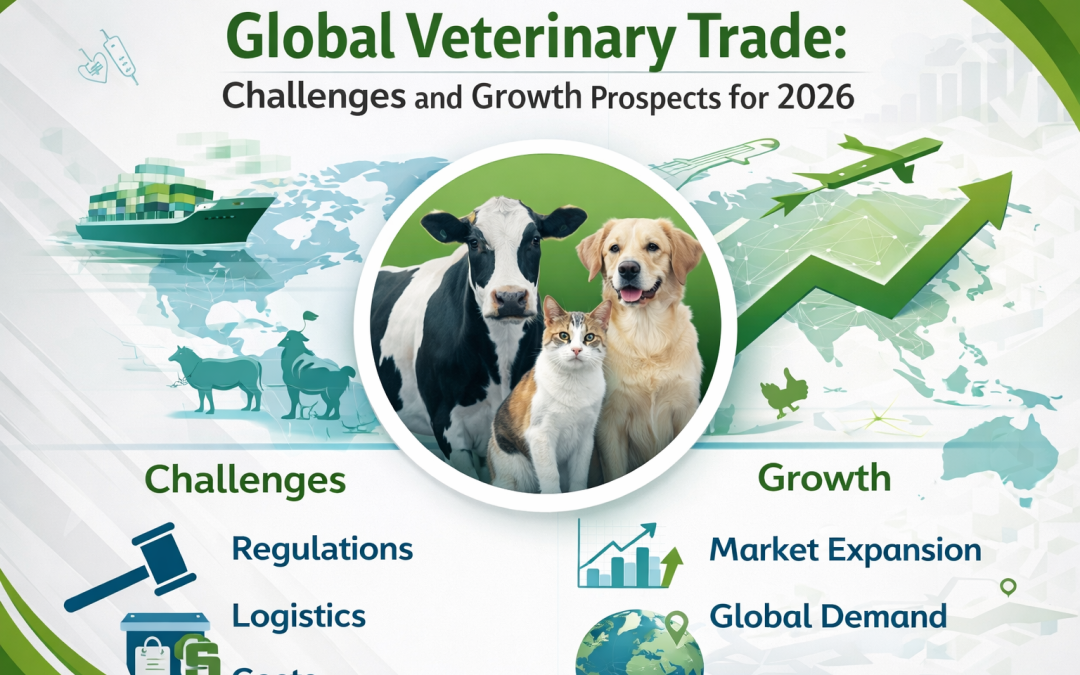
The animal health industry has always been quietly resilient — even when the broader economy stumbles, people still take care of their pets and farmers still need healthy livestock. But heading into 2026, “quietly resilient” doesn’t quite capture it anymore. The global veterinary trade is going through a real transformation, and while the growth opportunities are genuinely exciting, the challenges are just as real.
Here’s an honest look at where things stand.
A Market That’s Growing — For the Right Reasons
Let’s start with what’s driving demand, because the fundamentals here are strong.
Pet ownership around the world surged during the pandemic years and has stayed elevated. Millions of households that added a dog, cat, or other animal to their family during lockdowns didn’t return them when life reopened. Those animals are now a permanent part of the household — and so is the spending that comes with them. Veterinary care, preventive treatments, nutritional supplements, and specialty pharmaceuticals for companion animals are all seeing sustained demand.
On the livestock side, rising middle-class populations across Asia, Latin America, and Africa are consuming more meat, dairy, and eggs than ever before. That creates enormous pressure on food-producing animal operations to maintain herd health, maximize productivity, and minimize losses — all of which depend heavily on veterinary products and services.
Add aquaculture into the mix — one of the fastest-growing food production sectors globally — and you start to see just how wide the veterinary trade market has become. Fish farmers, shrimp producers, and shellfish operations all need health management products, vaccines, and nutritional support. It’s a segment that’s been underserved for years and is now attracting serious investment and attention.
The Challenges Are Real — and They Can’t Be Ignored
For all the growth happening in this space, anyone working in veterinary trade knows the headaches are significant.
Regulatory fragmentation is probably the most frustrating day-to-day reality. A product licensed and proven safe in one country can face years of additional review before it’s approved in another. There’s no global harmonization framework for veterinary medicines the way there is for some other sectors, which means companies operating internationally have to manage dozens of different approval processes simultaneously. It slows down market access and adds cost at every step.
Supply chain vulnerability is another issue that the industry is still working through. The pandemic exposed just how dependent veterinary pharmaceutical manufacturing is on a small number of API suppliers — mostly concentrated in China and India. When those sources face disruption, the ripple effects move fast. Companies that hadn’t diversified their sourcing found themselves unable to supply products that farmers and vets urgently needed. That experience has pushed the entire industry toward more resilient procurement strategies, but the transition takes time and money.
Antimicrobial resistance policy is reshaping product portfolios across the board. Governments everywhere are tightening rules on antibiotic use in animals, which is the right public health decision. But for manufacturers and traders, it means the old standby products are losing shelf space, and alternatives — probiotics, immune modulators, vaccines — need to scale up to fill the gap. That transition is happening, but it’s uneven across different markets and species segments.
Where the Real Opportunities Are in 2026
Despite the headwinds, the growth prospects for this year and beyond are genuinely compelling.
Vaccines and biologicals are seeing a surge in investment and innovation. The mRNA technology platforms that were rapidly scaled during the COVID-19 pandemic are now being adapted for animal health applications. Faster vaccine development timelines, broader coverage, and improved efficacy are all on the horizon — and for a market that’s shifting away from antibiotic dependency, that matters enormously.
Diagnostics and digital health tools are also opening new trade channels. Point-of-care testing kits, remote monitoring devices for livestock, and AI-assisted diagnostic platforms are moving from early adoption to mainstream use. The consumables, hardware, and software supporting these technologies all flow through international trade networks, adding real volume to the market.
And for companies like AminoPharma that have built their reputation on quality, reliability, and technical expertise in veterinary pharmaceuticals and nutritional products — this environment is actually a significant opportunity. When the market is complex and buyers are scrutinizing their supply chains more carefully, being a trusted partner matters more than ever.