
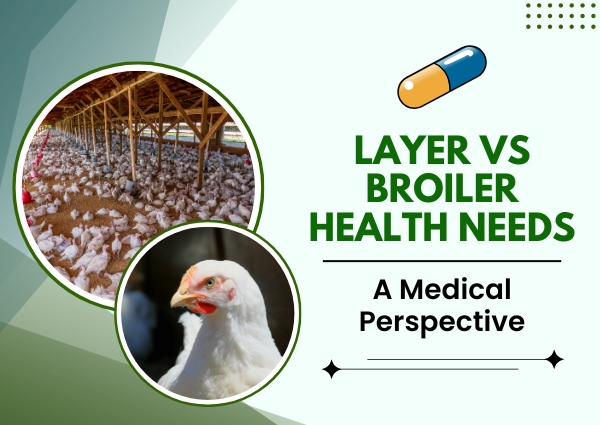
The poultry industry is broadly divided into two major sectors—layer farming and broiler farming. While both types of birds belong to the same species, their purpose, growth patterns, nutritional requirements, and healthcare needs differ significantly. Layers are raised primarily for egg production, whereas broilers are bred for rapid meat production. These differences directly influence the diseases they face, their nutritional demands, and the veterinary care required to maintain their health and productivity.
Understanding the distinct medical needs of layers and broilers is essential for poultry farmers, veterinarians, and poultry healthcare providers. Companies like Amino Pharma support modern poultry farming by offering quality veterinary healthcare solutions that help address the unique challenges of both layer and broiler production.
Understanding the Difference Between Layers and Broilers
Layers and broilers are selectively bred for completely different production goals. Broilers are developed to grow quickly, reaching market weight within a few weeks, while layers are managed over a much longer production cycle to maximize egg output.
Because of these differences, their bodies experience different physiological demands. Broilers require rapid muscle development and efficient feed conversion, while layers require continuous support for egg formation, calcium metabolism, and reproductive health.
As a result, veterinary healthcare strategies must be tailored according to the specific production purpose of each type of bird.
Nutritional Requirements and Their Medical Importance
Nutrition plays a central role in maintaining poultry health. Broilers require diets rich in high-quality protein and energy to support rapid growth and muscle development. Their feed is carefully formulated to maximize weight gain while maintaining overall health.
Layers, however, require balanced nutrition that supports egg production over an extended period. Their diets contain higher levels of calcium, phosphorus, vitamins, and trace minerals to maintain strong eggshell quality and skeletal health.
While nutritional inadequacies in layers can lead to thin eggshells, decreased egg production, and metabolic diseases, inadequate nutrition in broilers can cause delayed development, weak immunity, and poor feed efficiency.
Disease Challenges in Broiler Farming
Broilers are more vulnerable to diseases associated with rapid growth and intensive production systems. Respiratory diseases, digestive disorders, bacterial infections, and metabolic problems are among the most common health concerns.
Because broilers grow rapidly, even a short period of illness can significantly affect body weight and feed conversion efficiency. Heat stress, poor ventilation, and overcrowding can further increase disease risks.
Preventive healthcare, biosecurity measures, vaccination programs, and nutritional support are essential to maintaining healthy broiler flocks and achieving optimal production performance.
Health Challenges Faced by Layers
Layers experience different health concerns because they remain in production for a much longer period. Their bodies continuously produce eggs, placing significant demands on the reproductive system and mineral metabolism.
Common medical issues include calcium deficiency, reproductive tract infections, egg production disorders, osteoporosis, and nutritional imbalances. Long-term stress can also affect laying performance and increase susceptibility to infectious diseases.
Maintaining reproductive health, bolstering bone strength, and guaranteeing steady egg production throughout the laying cycle are the key goals of proper veterinarian care.
The Importance of Vaccination Programs
Vaccination is one of the most effective preventive healthcare measures in poultry farming. Both broilers and layers require carefully planned vaccination schedules, although the timing and vaccine selection may vary depending on production goals and disease risks.
Broilers often receive vaccines that provide protection during their relatively short lifespan, while layers require long-term immunity against diseases that could affect egg production over several months.
Vaccination regimens are kept effective and tailored to local disease circumstances by routine veterinarian oversight.
Managing Stress and Environmental Factors
Environmental management plays a major role in poultry health. Broilers are highly sensitive to heat stress because of their rapid growth and high metabolic rate. Poor ventilation or excessive temperatures can reduce feed intake and increase mortality.
Layers also experience stress from environmental changes, but prolonged stress can directly impact egg production and shell quality. Lighting programs, housing conditions, and proper ventilation are critical for maintaining their productivity.
Good farm management practices help minimize stress and improve the overall health of both types of birds.
The Role of Veterinary Medicines and Supportive Care
Veterinary medicines are essential for treating infections, controlling disease outbreaks, and supporting recovery. However, preventive healthcare remains the preferred approach in modern poultry farming.
Supportive therapies such as vitamins, electrolytes, probiotics, liver tonics, and immune boosters help maintain flock health and reduce production losses during periods of stress or disease challenges.
Companies like Amino Pharma provide veterinary healthcare solutions designed to support poultry farmers in maintaining healthier broiler and layer flocks through quality medicines and nutritional products.
Biosecurity as the Foundation of Poultry Health
Strong biosecurity measures are equally important for both broiler and layer farms. Restricting farm access, maintaining sanitation, controlling pests, and disinfecting equipment help reduce the spread of infectious diseases.
Since poultry diseases can spread rapidly through flocks, prevention is always more effective than treatment. Regular monitoring and early disease detection further strengthen farm health management.
Biosecurity not only protects birds but also improves productivity and reduces economic losses for poultry producers.
The Role of Veterinary Professionals
Veterinarians play a crucial role in designing healthcare programs that match the specific needs of layers and broilers. They provide guidance on disease prevention, vaccination schedules, nutrition, medication usage, and flock management.
Routine health monitoring allows veterinarians to identify potential issues before they become serious. Their expertise helps farmers make informed decisions that improve both animal welfare and farm profitability.
Veterinarians, farmers, and makers of veterinary medicines work closely together to build a more robust and long-lasting poultry healthcare system.
Although layers and broilers belong to the same species, their healthcare needs differ significantly due to their unique production purposes. Broilers require healthcare strategies focused on rapid growth, disease prevention, and feed efficiency, while layers need long-term support for reproductive health, bone strength, and consistent egg production.
Farmers may improve treatment and increase output by being aware of these medical variations. With trusted veterinary healthcare partners like Amino Pharma, poultry producers can access high-quality medicines, nutritional supplements, and healthcare solutions tailored to the specific requirements of both layer and broiler farming.
By combining proper nutrition, preventive healthcare, strong biosecurity, and professional veterinary guidance, farmers can build healthier flocks, improve production performance, and ensure sustainable success in the modern poultry industry.